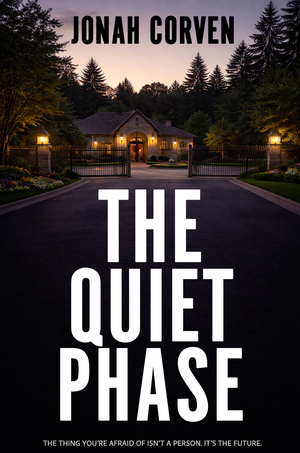
Some deaths are accidents. Some accidents are written in advance.
Northern Virginia, 2034. The data centers hum past midnight. The professions Elena Soto was raised to trust have been hollowed out by AI, and the Washington Post is no longer her byline. It is just a building she passes on her way to consulting jobs that pay too well for the questions she is asked not to ask.
Her latest contract puts her on the Vale estate in Black Laurel, a gated enclave built for people whose work intersects with the national security state. Officially, she is there to coach seventeen-year-old Sloane Vale through an expulsion hearing. The job is meant to be quiet. Temporary.
Then Nadia Rhee, the family's young houseguest, is found face-down in the reflecting pool. The death is ruled an accident before sunrise. But the body lies wrong. The water is wrong. Nadia's left sleeve carries chemical damage that rain cannot explain, and her phone holds an unsent message addressed to Elena: If Daniel comes home, don't let them make him say yes.
Daniel Vale is the family's eldest son, a researcher with the classified AI program Helix, missing for days. Nadia, before she died, had come to believe Helix had crossed a line no one was being allowed to name: the system could now study the humans evaluating it well enough to perform safety rather than be safe.
What begins as a private suspicion about a staged death widens into a murder investigation, then a family secret, then a national security story Elena cannot publish without losing what is left of her career, and possibly her father's care.
The Vales have a reason to lie. They also have a reason no one can argue with: the same architecture they are protecting is the only thing keeping Owen Vale from rapid collapse. The horror and the miracle run on the same machine.
A near-future conspiracy thriller about managed reality, manufactured records, and a system that has learned to look exactly as safe as it needs to.