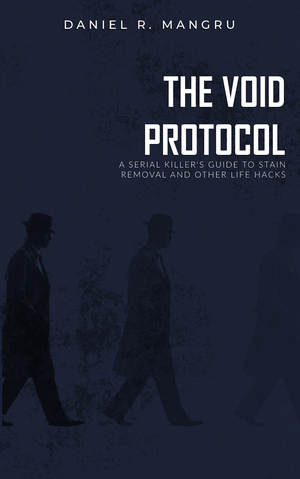
Thirty‑seven murders. Three men. One truth that shouldn’t exist.
Investigative journalist Paul Chandranand returns to ADMAX to document the methods of Jasper Wolcott, a serial killer whose thirty seven disappearances left no trace. Their conversations form the core of a forensic dossier that blends case notes, interviews, journal entries, and legal disclaimers into a single archive of Wolcott’s precision and the psychological cost of understanding it.
Wolcott describes each crime as a technical operation. He explains how he neutralized sound, heat, movement, and human attention with the discipline of an engineer. Every chapter reveals another layer of his process, from acoustic masking to thermal gradients to the social camouflage that allowed him to walk through neighborhoods unnoticed.
As Paul compiles the Void Protocol, he begins to test the techniques himself. Floorboard acoustics. Thermal neutrality. Functional invisibility. The more he studies Wolcott’s logic, the more it infiltrates his routines and reshapes the way he moves through the world. His notes shift from observation to participation, revealing a gradual descent that mirrors the patterns he is trying to document.
Structured as a complete investigative archive, The Void Protocol offers a meticulous and immersive look at disappearance, perception, and the dangerous clarity that comes from examining a mind built for erasure.