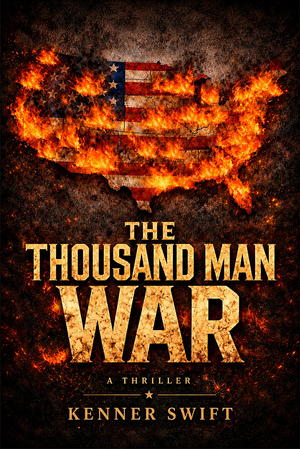
They could have killed more. They chose not to.
On a Friday in January, a coordinated attack unfolds across all fifty states at once—highways, grocery stores, the ordinary places of American life. The choreography is identical at every site. The dead are counted by morning, and recounted for days. And no one claims it. No manifesto. No demands. Nothing.
Most thrillers ask who did it and whether they can be stopped. This one removes both questions. The attack is not prevented. No one is hunted to a tidy capture. What remains is the harder question—what kind of mind designs something like this, and what do they want?
FBI counterterrorism agent Davis Kershaw, working out of the Joint Terrorism Task Force in Manhattan, spends the book learning to read a doctrine he was never trained to recognize. He is very good. He is also outmatched. And the reader will often see the shape of the thing before he does.
Because the real horror is not the count of the dead. It is the slow realization that every terrible thing was a choice—and that the choices add up to a design.
Not a chase. A reckoning with a kind of adversary our thrillers rarely take seriously.
The Thousand Man War is the first book of a trilogy.