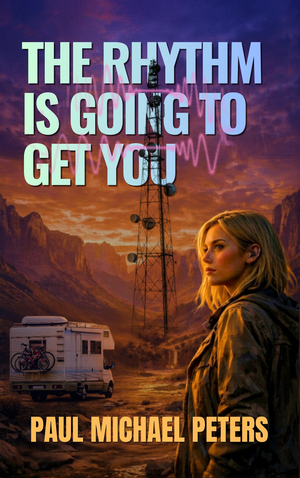
Paradise fit in a van. The apocalypse fit in eight bars.
Charlie has been deaf since he was nine—the only person left alive who can't hear the song that's ending the world.
He spent that life watching from the outside: reading lips, living out of a converted van he named Mrs. Driscoll, because she always demanded to be treated like a lady. Then a Scottish madman with a V6 crammed into a child's toy car handed him a map to a hidden canyon in the Arizona backcountry—water, shade, a pool so clear you can count the stones on the bottom. Charlie found his Valhalla. And then Anna found him: a British van-lifer with good coffee and a laugh worth crossing a wasteland for. For five days, for the first time, he belonged somewhere.
Then the towns go wrong. The same song on every station, looping. People stand in diners—not blinking, not eating, not leaving. Eyes that follow him without seeing him.
Something in the music is calling everyone who can hear it. It doesn't kill them. It offers a sense of belonging so complete that refusing feels like the loss.
Charlie can't hear a note of it. But Anna can.
What follows is one man crossing a breaking world—on foot, on a bent bicycle, through flooded desert and infected towns—to reach the woman who finally saw him. And one woman fighting to stay herself long enough to be worth saving, while the thing inside her grows patient, warm, and very good at sounding like home.
For readers who always suspected the quiet ones were paying the closest attention.
For fans of Station Eleven, Bird Box, and A Quiet Place who always wished the love story got to be the point.