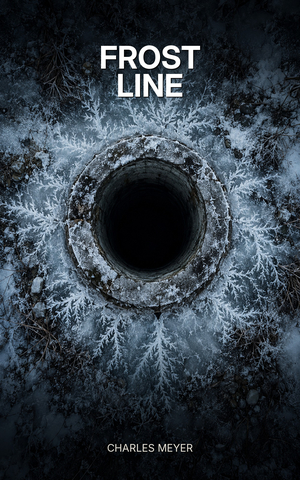
A Vermont Farm's Darkest Secret Has Been Waiting 280 Years
A brass plug. A six-inch disc. Two turns of a wrench—and twenty-six years of certainty begin to come apart.
Dale Thackray has dropped inspection cameras into a thousand septic tanks. He knows what thirty feet of Vermont bedrock looks like. He knows frost lines, water tables, the temperature at which ground stops changing with the seasons. He knows what is possible.
The monitor on his forearm shows cut granite. Mortar lines too precise for field stone. A date chiseled into the lowest chamber: 1743.
The woman who owns the farm is not surprised. She has been waiting for someone to find it.
Beneath the Bramhall hilltop lie three sealed chambers, stacked in bedrock, holding 34°F in August heat. The Bramhalls have watched over them for seven generations—maintaining the seals, monitoring for frost, passing the knowledge forward in the week before each death. But the frost has reached the basement walls now. Then the stairs. Then the landing. And the seal at the bottom, the one containing something a French military captain refused to describe in 1743, is beginning to give.
What Dale finds in the middle chamber—seventeen figures arranged in a circle, facing inward, frozen solid in positions no man placed them in—is not the worst thing down there.
The worst thing is the chamber below it—the one no one in two hundred eighty years has been willing to describe.
Frost Line is a story about what gets buried and what refuses to stay that way. About the weight of inherited silence and the moment one person decides to stop carrying it in silence. About the particular dread of understanding—fully, clearly, without any remaining doubt—what you have let up out of the ground.
The cold has been patient for two hundred eighty years. It can wait a little longer.
But it won't have to.