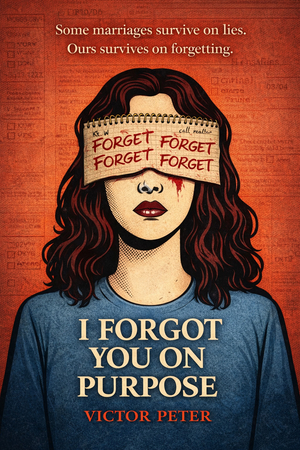
A house stripped of personality. A marriage built on control. A single discrepancy that refuses to stay erased.
When Kate agrees to prepare Mildred Ashcroft’s immaculate home for sale, she expects silence, dustless surfaces, and the quiet rhythm of routine. Inventory. Stage. Secure. Log. Repeat.
The house is pristine—almost aggressively so. No photographs left out. No sentimental clutter. Every drawer aligned with mathematical precision. It feels less like a home and more like a statement: Nothing happened here.
Kate understands that kind of order. She and her husband, Adam, have built their life around it. Clear roles. Clear records. Clear rules. Their system keeps misunderstandings from taking root. Their system keeps emotion from escalating. Their system keeps everything safe.
Until the system fails.
It starts small. An item in a drawer Kate is certain was empty. A faint indentation in carpet that suggests something heavy once stood there. A locked compartment that wasn’t listed in the estate inventory. And then—worse—a folder she catalogs carefully, only to find it missing hours later.
No broken windows. No security alerts. No explanation.
Adam insists the logs are clean. The doors were sealed. The timelines match. According to the record, nothing is wrong.
So why does Kate feel watched?
Why do objects seem to shift when she turns her back?
Why does Adam’s calm feel rehearsed?
And why does the house feel less like a property waiting to sell… and more like evidence waiting to be discovered?
As showings approach and potential buyers wander through the staged perfection, Kate’s certainty fractures. Each visitor lingers too long. Each question sounds loaded. Each perfectly arranged room feels like a performance designed to conceal something catastrophic.
The deeper she digs, the clearer the pattern becomes: someone is adjusting the narrative in real time. Documents are refined. Dates are clarified. Small inconsistencies are smoothed over before anyone else can notice them.
And if the narrative can be corrected… so can memory.
In a world where everything is documented, proof becomes power. And the person who controls the record controls the truth.