The era of the quiet build is over.
Real data centers are landing in real towns now—drawing from real grids, competing for real water, creating real political fights. AI infrastructure is no longer abstract. It has weight, location, and consequences. And the public conversation about it is being drowned out by the loudest voices in every room. Good projects are dying for bad reasons. Bad projects are getting built. The difference between the two has stopped being legible to most communities.
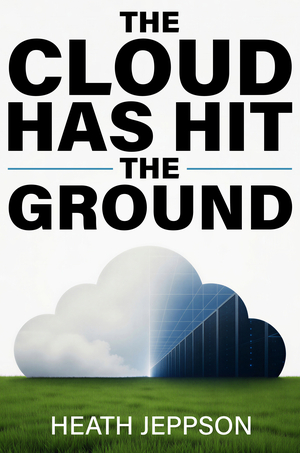
The Cloud Has Hit the Ground is a senior cybersecurity practitioner's argument for a different way forward. Heath Jeppson has spent thirty years inside critical infrastructure—across the trades, the U.S. Marine Corps, FEMA, USDA, the U.S. Air Force, and his current work protecting water and power systems. He writes from inside the work, not from outside it.
The book walks through the cases that matter: the Aliquippa water utility breach, the Volt Typhoon pre-positioning campaign, the Tucson rejection of Project Blue, the Stockholm and Meta Odense models for what good looks like. It names the cybersecurity threats most communities cannot evaluate on their own, the workforce gap that no amount of capital can paper over, and the difference between legitimate civic opposition and the BANANA—Build Absolutely Nothing Anywhere Near Anything—pathology that has captured too many town halls.
Jeppson lays out a Civic Infrastructure framework grounded in transparency, security, workforce development, and a covenant between builders and the communities that host them. He proposes a Municipal Covenant any town can demand and an Executive Covenant that builders must hold themselves to.
This is a serious nonfiction book aimed at readers who want to think clearly about the AI infrastructure buildout reshaping American communities. It will be most useful to mayors, council members, water and power utility professionals, cybersecurity practitioners, data center developers, policy professionals, and engaged citizens.
Readers looking for a quick polemic in either direction—pro-build or anti-build—will not find it here. Readers looking for a practitioner-grounded framework for thinking through the actual decisions communities are facing will find this book useful for years.
Endorsed by Chris Crosby, founder and CEO of Compass Datacenters.