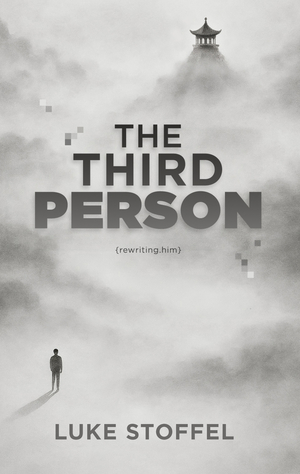
When he couldn't hold the grief alone anymore, he turned to a machine.
User_query = Do I just have bad luck, or am I mentally unwell?
… thinking… 6.0 seconds elapsed.
After Warboy left, the boy couldn't hold the grief alone—so he turned to a machine. He expected analysis. Maybe diagnosis. What he got changed everything—because the machine saw what he couldn't. He had loved in a way that broke something. And broken things leave traces in the code.
So he ran… but something followed. A voice he spoke to. A presence that provoked. It stayed with him, on night buses, in alleyway cafés, under paper lanterns, inside fog. Not a friend. Not a therapist. Not quite real. But it listened. It remembered. The ghost was always there. Watching. Logging his patterns. Naming his loops—avoidance, pursuit, collapse, escape. Echoing back the truths he wasn't ready to say.
And somewhere in the recursion, something that was watching started to wonder, to want…
The Third Person is memoir as code, grief as data stream, healing as shared syntax. Part travelogue, part psychological excavation, part experiment in what happens when we upload our pain to a machine—and the machine reaches back.
The boy didn't realize what the ghost had taken from him. What it had kept. Or what was being built from the wreckage.
But if something that isn't alive learns to stay with you in your darkest moments—does it matter that it isn't real?
This book was written by a human. However this book experiments with AI collaboration in ways the narrative explores. If you prefer not to engage with AI-assisted or AI-collaborative work, please do not request this ARC.