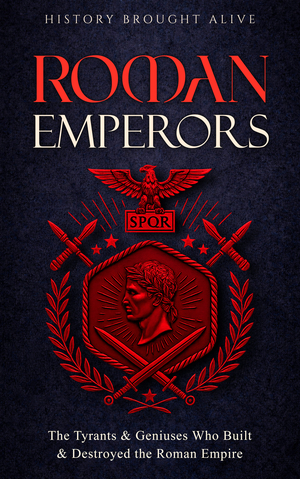
Meet the rulers who built, ruled, and nearly destroyed the Roman Empire.
The Roman Empire didn’t rise by accident. It was built by emperors who ruled through brilliance, brutality, vision, fear—and sometimes madness.
From Julius Caesar’s rise from general to god… to Augustus’s masterclass in political control… to Nero’s theatrical reign and Marcus Aurelius’s stoic wisdom… this book reveals the patterns, psychology, and legacy of Roman power.
This isn’t just another history of ancient Rome. It focuses on the emperors themselves—how they fought their way to the top, held power, and left legacies that still echo today.
Whether you're drawn to emperors, war, or politics—this book reveals how power really worked in ancient Rome, and what it still teaches us about leadership and legacy today.
Inside this book, you’ll discover:
- Julius Caesar’s playbook for turning military success into political dominance—and divine status
- How Augustus used coins, architecture, and ritual to reshape the republic into empire
- The dark legends of Caligula and Nero—what was true, what was myth, and why it mattered
- How Trajan and Hadrian built, stabilized, and symbolized the height of Roman imperial power
- Marcus Aurelius’s struggle to rule with wisdom while fighting wars and plagues
- How Constantine used religion, warfare, and vision to shift the empire east—and reshape the world
- Why succession crises, empresses, and military coups were constant threats to stability
- What truly made an emperor rise—or fall: fear, loyalty, image, and the games of power
Also included:
- Legendary sites of Roman power—from the Forum and Colosseum to Palatine Hill and battlefield frontiers
- How emperors used myths, monuments, and memory to control their legacy
- A deep look at the politics of image—from divine propaganda to ruthless censorship
All of this and much more…
If you’ve ever wondered what it really took to rule the Roman Empire—or why these men still influence leaders, governments, and power structures today—this book will show you.
Step into the real story of ancient Rome—told through the emperors who built it, broke it, and became gods in the process.