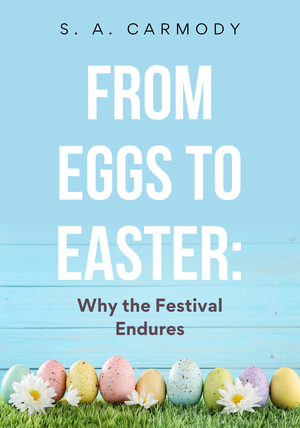
Easter did not begin as a neat story with a single origin. It emerged gradually, shaped by season, belief, practice, and necessity. This book examines how a spring festival survived centuries of change, argument, and adaptation, and why it continues to be recognised even where religious observance has faded.
Drawing on archaeology, early texts, theology, cultural history, and everyday custom, From Eggs to Easter traces the development of Easter from early spring observances through the formation of Christian ritual and into modern secular celebration. It looks closely at where evidence is solid, where it is uncertain, and where later interpretation has blurred the line between history and assumption.
This is not a book of myths presented as fact. It questions popular claims about pagan origins, fertility symbols, and hidden continuity, explaining what can genuinely be supported and what cannot. Eggs, fasting, calendars, saints, councils, and communal marking of time are explored in their proper historical contexts, without romantic reconstruction.
Written for general readers, this book assumes curiosity rather than belief. It explains how Easter functioned socially as well as religiously, how it adapted to different regions and climates, and how repetition turned practical responses to spring into enduring tradition.
Whether Easter is observed in church, marked by food and family, or encountered only through public holidays and chocolate eggs, its persistence is not accidental. This book explains how that endurance was built.
Ideal for readers interested in
- Cultural and religious history
- Seasonal festivals and ritual
- Christianity in historical context
- Evidence-based exploration of tradition
- How customs survive beyond belief
Clear, measured, and accessible, From Eggs to Easter: Why the Festival Endures offers a grounded account of a festival that continues to shape calendars, communities, and collective memory.