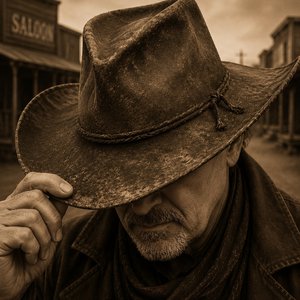
My love for the Western novel began around 1971, when my best friend’s father handed me two books: The Big Sky by A. B. Guthrie Jr. and Warlock by Oakley Hall. Until then, my Old West had been shaped mostly by television, where good men were pure and villains were easy to recognize. Hall shattered that simplicity. In his West, law was improvised, justice was uncertain, and every character carried some moral stain. Guthrie showed me that landscape could be more than setting—that weather, distance, beauty, and brutality could mirror the soul.
Later, James Welch’s Fool’s Crow taught me the power of restraint: characters revealed rather than explained, violence stripped of glamour, meaning carried in what remains unsaid. Larry McMurtry’s Lonesome Dove deepened that lesson, proving that the West belongs not to white hats and black hats, but to flawed people facing choices they may not be ready to make.
Those books shaped the West I believe in: harsh, beautiful, morally complex, and deeply human.